

The Digital Euro – Ethics or Competition?

Every day, the digital jungle confronting the 21st-century citizen continues to expand. It spreads into ever more remote areas, while zones of so-called “digital deserts” are steadily shrinking. The programs and applications we use are increasingly embedded in our daily lives, and their protection, monitoring, and security have become central issues for national policies across the globe. As internet users grow ever more dependent on GAFAM, entrusting their lives to the discretion of American and Chinese tech giants, the European Union and its institutions have set themselves the mission of providing competitive, ethical, and secure frameworks for both citizens and businesses. Digitalisation of public services, legal and economic sovereignty, digital currency — the Union is deploying its resources on all fronts of the digital sector in an effort to catch up.
The Old Continent’s Lag in the Digital Sector
As the world’s second-richest geographical area, home to half a billion mostly urbanised and connected citizens, Europe’s annual €300 billion investment in digital Research & Development (around 2% of GDP) has nonetheless proven insufficient to elevate it to the rank of a true digital power. Facing the United States — which has dominated the sector since the ARPANET of the 1960s, through the GAFAM of the 2010s and the emerging NATU (Netflix, Airbnb, Tesla, Uber) — and China, which has established itself as a new giant through its BATX ecosystem (Baidu, Alibaba, Tencent, Xiaomi) combined with a strong protectionist policy and active promotion of artificial intelligence, European companies and organisations can only aspire to limited and local success. The American giant finances tech start-ups, promotes entrepreneurship, and controls 90% of the world’s most visited websites, accounting for 84% of global digital market capitalisation, while European shares struggle to reach 3%.
Multi-Level Programmes to Revive Competitiveness
While European policies did little to foster digital development until the mid-2010s — largely due to the absence of large-scale, proactive strategies — the past decade has been marked by a shared determination among Member States to develop an accessible and competitive digital environment. Educational programmes have been launched, such as “Digital Skills for You”, which provided digital training to 100,000 Swedes in 2023. Public-private partnerships have also been established. In early 2023, the European Commission allocated €20 billion over five years to the company “AI4UE” to stimulate AI research and development within the Union. One may also cite “Next Generation EU”, a new €750 billion European fund dedicated to digital companies, created following the April 2021 draft Regulation aimed at unlocking AI’s potential. Similarly, the semiconductor production plan adopted in September 2023 focuses on developing the materials essential to Europe’s competitiveness and production autonomy.
The Double Digital Divide: The Challenges of a Heterogeneous Europe
While transatlantic and Asian powers dominate global rankings, the 27 EU Member States produce, finance, and access digital technologies unevenly. Socio-economic disparities, as well as divergent infrastructures and legal frameworks, have led each State to apply its own rules in a sector that transcends borders. In 2018, geo-blocking of websites in certain countries threatened competition in an already fragmented digital market. The distribution of Europe’s 28 unicorns — companies valued at over one billion euros — was so unbalanced that more than half were located in the United Kingdom. Despite reforms aimed at harmonising national legislation while financing promising digital activities, Europe’s heterogeneity is also reflected in unequal funding. Ireland and Finland alone account for 25% of European digital funding, while Latvia, Lithuania, and Portugal struggle to reach 5%. To unify the digital projects of the 27, ensure competitiveness commensurate with Europe’s resources, and create new digital champions after Brexit deprived the Union of half its unicorns, an unprecedented programme in scope and ambition was launched under the impetus of Commission President Ursula von der Leyen: the Digital Decade 2030.
For Sovereignty and Competitiveness: The Digital Decade 2030
Following the “Digital Strategy” published by the European Commission in 2020, the Digital Decade 2030 aims to organise Europe’s digital transition while minimising dependence on international systems and maximising European competitive potential. With a budget of €7.5 billion — still relatively modest given the sector’s needs — the programme focuses primarily on defining shared objectives, strengthening coordination, and deepening cooperation among Member States, supported by biennial reports and continuous information sharing. This approach enables the Union to be conceived as a single entity, with balanced efforts from Portugal to Poland. Spanning ten years, the programme finances key areas such as supercomputing, artificial intelligence, cybersecurity, and advanced digital skills.
The targets are ambitious: 20 million digital technology specialists and 80% of the population comfortable with digital practices. Businesses are also central: 75% are expected to adopt cloud, AI, and Big Data technologies, while 90% of SMEs should gain access to basic digital tools. Public services are to become fully digital, with 100% of citizens having access to online health platforms. The report further highlights the importance of ethics and transparency in AI, as well as the need for a secure digital identity for all.
A Broad and Transformative Project
This innovative project affects sectors as diverse as healthcare and telemedicine, manufacturing and 3D printing, 5G, data collection, the production of new printed construction materials, logistics and traffic-management software, agriculture (with an estimated 15% increase in European agricultural output by 2030), and mobility through digital transport coordination. Added to this are estimated annual savings of €120 billion, as well as flagship projects such as quantum computers in Brussels or semiconductor plants in Germany. Seven years ahead of the deadline, 81% of European territory is now covered by 5G, placing the EU ahead of both China and the United States in deployment. The number of unicorns has doubled since 2022, and an increasing number of companies are modernising.
A New European Legal Sovereignty: The Consumer at the Centre
To ensure and strengthen its legal sovereignty, the European Union has engaged in harmonising national legislation while regulating Member State activities. While early personal data protection directives date back to 1995, the General Data Protection Regulation (GDPR) adopted in 2018 marked a decisive breakthrough. It established principles of transparency, data portability, and the right to be forgotten, applicable not only to European citizens but also to non-European companies offering services within the EU. Five years on, the GDPR has proven effective, with over 300 fines for non-compliance, totalling €190 million, illustrating the EU’s firmness in data protection. Google, for instance, adjusted its privacy settings in response, underscoring the regulation’s tangible impact on digital giants.
Taxation, Regulation, and Digital Power
On the fiscal front, an OECD-supervised agreement concluded in 2021, which entered into force on 1 January 2024, mandates a 15% global minimum tax for multinationals with revenues exceeding €750 million. The OECD estimates revenues of €750 million, half of which will be reinvested in the European digital budget. Key figures behind this dynamic include Margrethe Vestager, Executive Vice-President for Competition and Digital Europe, and Thierry Breton, Commissioner for the Internal Market, who spearheaded the regulations unveiled in December 2020 to control online content and combat unfair competition. Ongoing reforms aim to counter the dominance of oligopolies and GAFAM, long able to impose their rules through practices such as fiscal dumping — notably by establishing headquarters in low-tax jurisdictions like Ireland. Projects such as a European cloud and a European payment system further illustrate the EU’s ambition to strengthen sovereignty in strategic sectors, while keeping the “European user at the centre”, as stated by President von der Leyen. The European Declaration on Digital Rights and Principles (2022), along with the DSA and DMA adopted in summer 2023, promote secure, sustainable, inclusive, and open digital services, while the “Europrivacy” regulation guarantees data confidentiality and child protection.
Security, Cybersecurity, and Migration
Digital technologies can serve not only as ends in themselves but also as means. With a 60% increase in cyberattacks between 2022 and 2023, significant technological advances have been made in security, particularly at EU borders. The Schengen Information System (SIS) was upgraded in 2022 alongside the NIS2 cybersecurity framework. These systems interact with Eurodac and the new Visa Information System (VIS), enabling border guards to access comprehensive data on daily entries into the Union. Critics argue that these tools undermine freedom of movement and foster discrimination. In March 2023, Alexander Abaradjiev, President of the International Federation for European Law, criticised the new EU entry/exit systems and the VIS for tracking third-country nationals’ movements.
The Digital Euro Project and Its Drifts: A Threat to European Citizens?
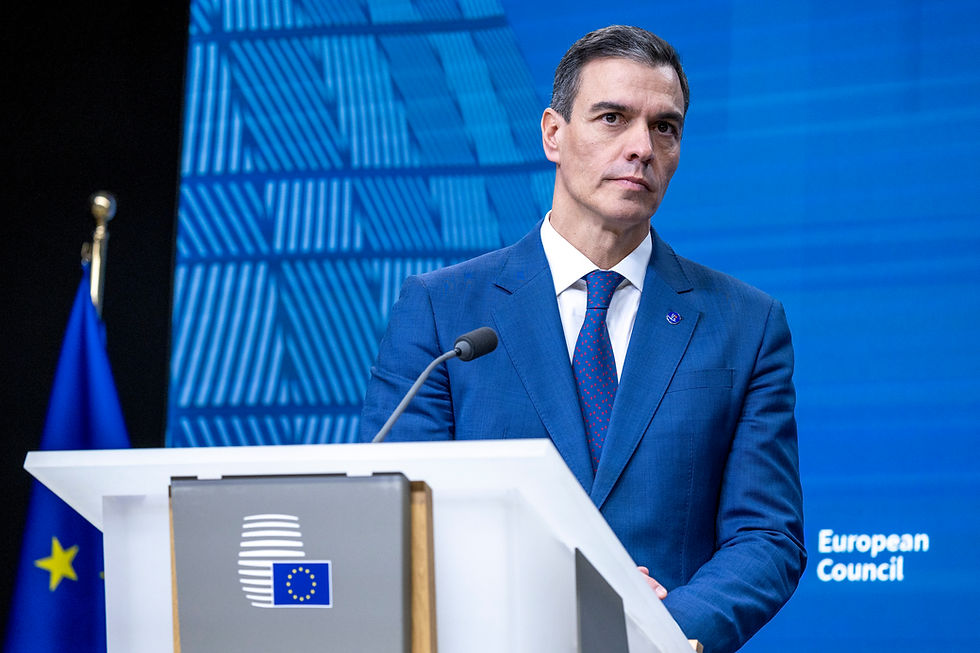
“Who controls money controls the world,” said Henry Kissinger. As the United States, China, and Japan prepare to launch their own digital currencies, the European Council examined in 2023 the ECB’s legislative proposals for a fully digital euro. While 45% of European consumers still prefer cash according to Eurostat, the proposal aims to fully digitise the euro by 2027. In an era of increasingly digital transactions, such a shift appears logical. Accessible via an application, the new euro would eliminate physical currency. Fabio Panetta, ECB Executive Board member, outlined the benefits in 2021: elimination of tax fraud and money laundering, instant smartphone payments, financial inclusion, and fair competition — even preventing banking crises. In March 2023, three US banks (Silvergate, Silicon Valley Bank, Signature Bank) collapsed in just five days; a centralised digital currency could protect EU states from liquidity crises. However, a fully digital currency implies total transaction traceability. As ECB President Christine Lagarde stated, bank accounts would be linked to a European digital identity, leaving citizens no means of private transactions. Programmability would allow the currency to be restricted by geography, purpose, or date. As the Bank for International Settlements stated on 7 April 2022:
“With digital currency, the central bank will have absolute control over the rules that determine the use of money.”
For the first time in history, centralisation, traceability, and programmability could be embedded at the very core of money, posing risks to individual sovereignty.
A Debate Flying Under the Radar
In the United States, opposition to digital currency is growing. Laws against a digital dollar are debated in Minnesota, Texas, and Florida, and presidential candidate Robert Kennedy has made opposition to central bank digital currencies a campaign issue. In Europe, the ECB reassures that the digital euro will not be programmable, and supporters argue that national sovereignty will be preserved, with the EU acting merely as a coordinating tool. It remains difficult to imagine direct EU fines, rationing systems, or payment refusals for airline tickets due to annual pollution quotas.
The European Digital Wallet: Over-Connected Public Services ?
If the Digital Decade 2030 succeeds, Europe’s main public services will be accessible through digital identity within a decade. The Commission is already proposing models for a European digital identity wallet. Once registered, no physical medical records or insurance cards would be required. Could such a system extend to ID cards or banking data? A fully synchronised digital file could pose serious risks to individual freedoms. While alarmists envision a dystopian future of constant surveillance, concrete measures already raise concern. The International Federation for Human Rights (FIDH) warned of developments by Disruptive Subdermals, which in 2021 implanted subcutaneous chips to store health pass data. “Although advantageous and practical, designed to protect citizens from intrusive GAFAM and facilitate access to public services, European digital identity could — if poorly controlled — open the door to an irreversible stage where fiscal, legal, judicial, and medical data become instantly accessible by authorities,” warned Virginie Joron, Member of the European Parliament.
The Bible, Revelation 13:17: “And that no one may buy or sell except one who has the mark.”Like any major technological leap, Europe faces the challenge of fostering digital competitiveness aligned with its ambitions for development and sovereignty, while guaranteeing ethical practices that are often difficult to define and enforce. Guided by its history and values, the Union must advance in the technological race shaping contemporary power relations — without ever yielding to a model akin to China’s, where digital identity is tied to a social score assessed through intrusive and anti-democratic surveillance.


Comments